

Slavery has no place in your morning cup.
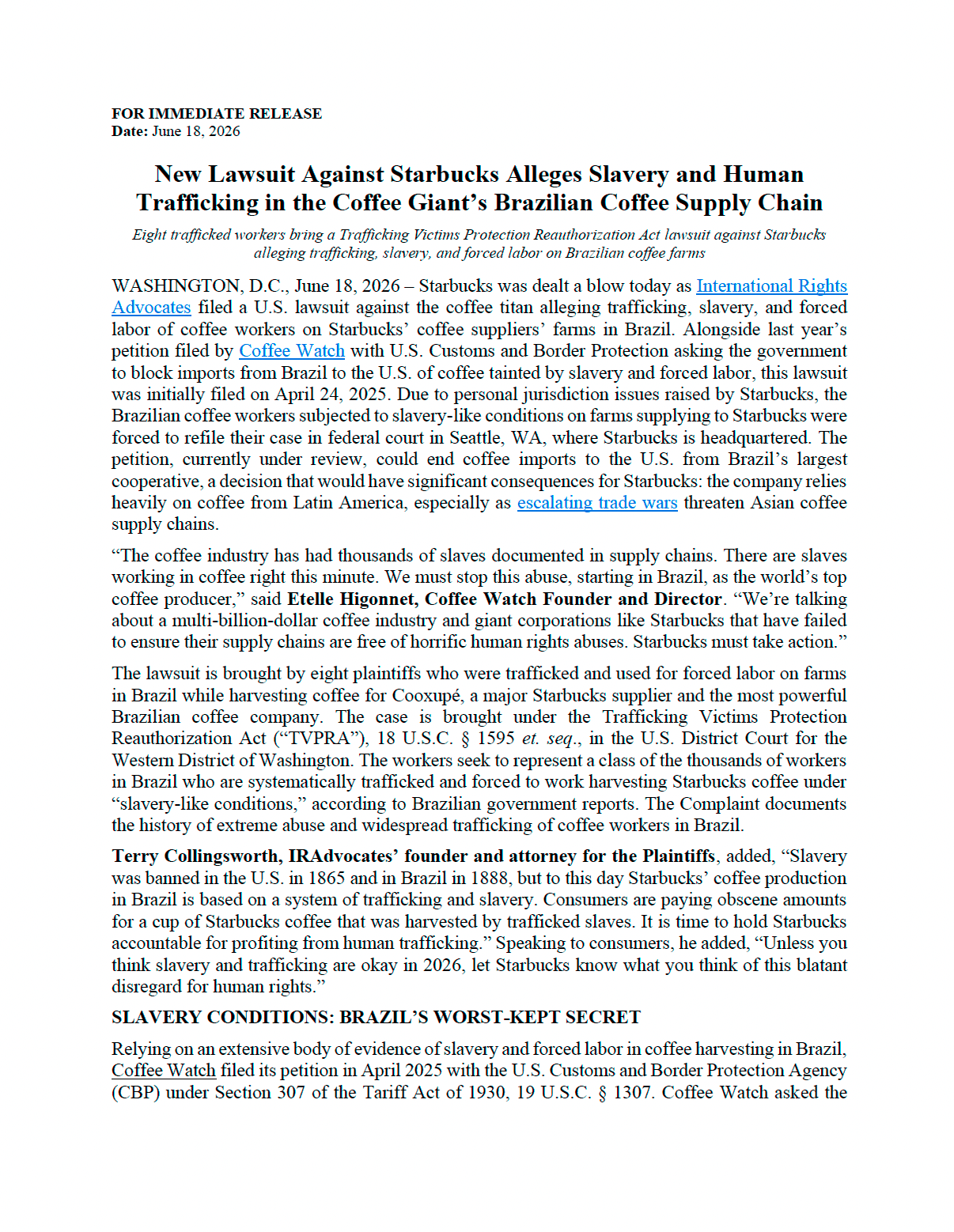
ON JUNE 18, 2026, INTERNATIONAL RIGHTS ADVOCATES FILED A LANDMARK LAWSUIT AGAINST STARBUCKS ON BEHALF OF EIGHT BRAZILIAN WORKERS WHO WERE ALLEGEDLY TRAFFICKED AND FORCED TO HARVEST COFFEE UNDER CONDITIONS U.S. LAW DEFINES AS MODERN SLAVERY.
In partnership, advocacy group Coffee Watch petitioned U.S. Customs and Border Protection to block Brazilian coffee imports from Starbucks and other industry leaders including Nestle, Jacobs Douwe Egberts, Dunkin', Illy, and McCafé. LEARN MORE ABOUT COFFEE WATCH HERE.

About the Case

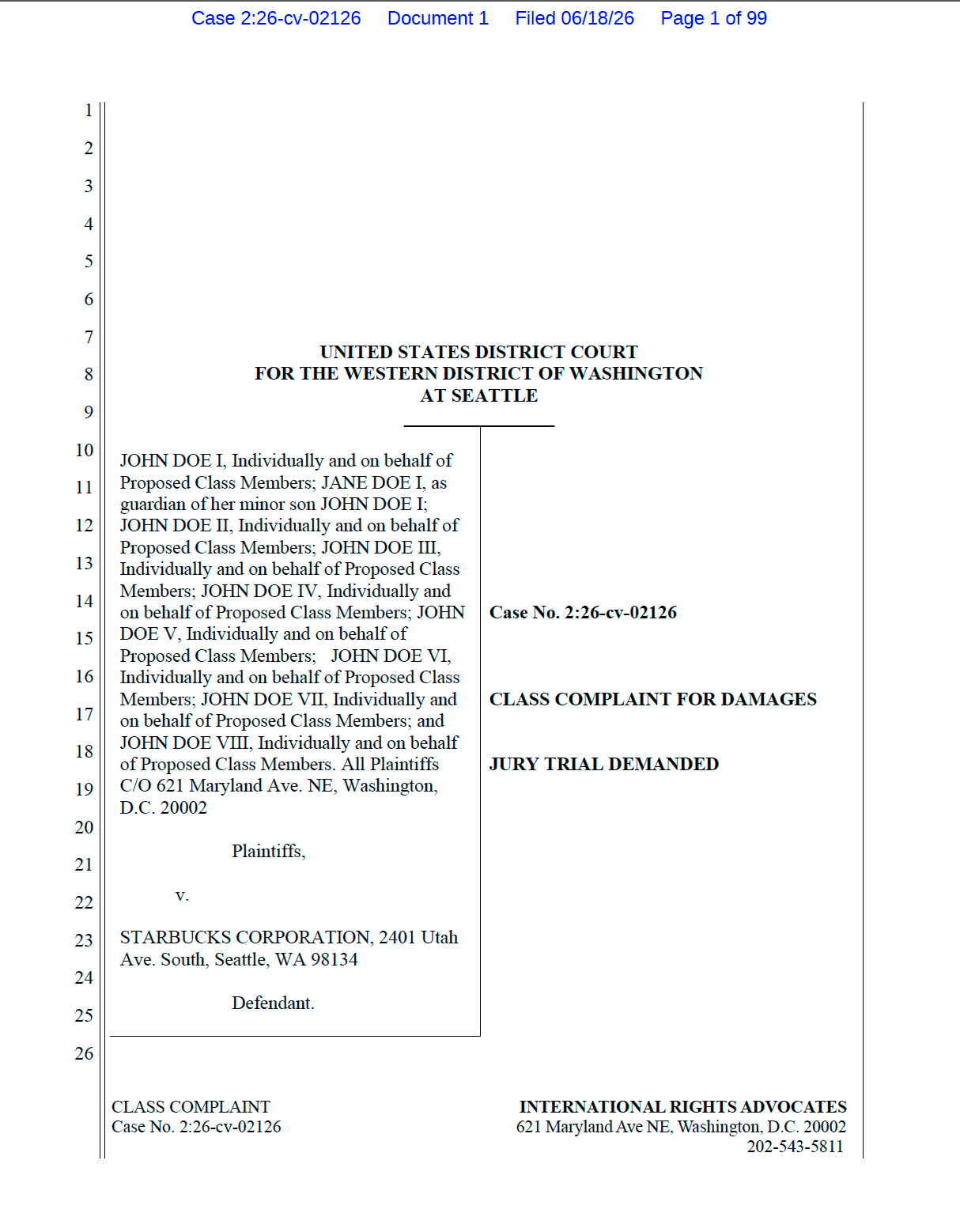
The lawsuit, filed in the U.S. District Court for the Western District of Washington.under the Trafficking Victims Protection Reauthorization Act (TVPRA) 18 U.S.C. § 1595 et. seq., seeks to represent thousands of workers harvesting coffee under slavery-like conditions.
Alongside the 2025 petition filed by Coffee Watch with U.S. Customs and Border Protection asking the government to block imports from Brazil to the U.S. of coffee tainted by slavery and forced labor, this lawsuit was initially filed on April 24, 2025. Due to personal jurisdiction issues raised by Starbucks, the Brazilian coffee workers subjected to slavery-like conditions on farms supplying to Starbucks were forced to refile their case in federal court in Seattle, WA, where Starbucks is headquartered
If you would like to see the filing from 2025, information is linked below.
On April 24, 2025, International Rights Advocates filed a landmark class action lawsuit in the U.S. District Court for the District of Columbia against Starbucks Corporation on behalf of eight plaintiffs and a proposed class of thousands. The suit alleges that Starbucks profited from a system of modern slavery and human trafficking used to harvest coffee beans in Brazil, particularly through its supplier relationship with Cooxupé, the largest coffee cooperative in Brazil.
The complaint presents detailed evidence that workers—many from historically marginalized Black communities known as Quilombos—were lured by fraudulent promises, then forced to work in debt bondage under inhumane conditions without proper wages, protective equipment, or freedom of movement. The Brazilian government has previously documented these conditions as “analogous to slavery.”
Starbucks has long claimed its coffee is “100% ethically sourced.” This case directly challenges that assertion.


In the News
-
![]()
Der Spiegel (English Translation)
-
![]()
Der Spiegel
-
![]()
New York Times
-
![]()
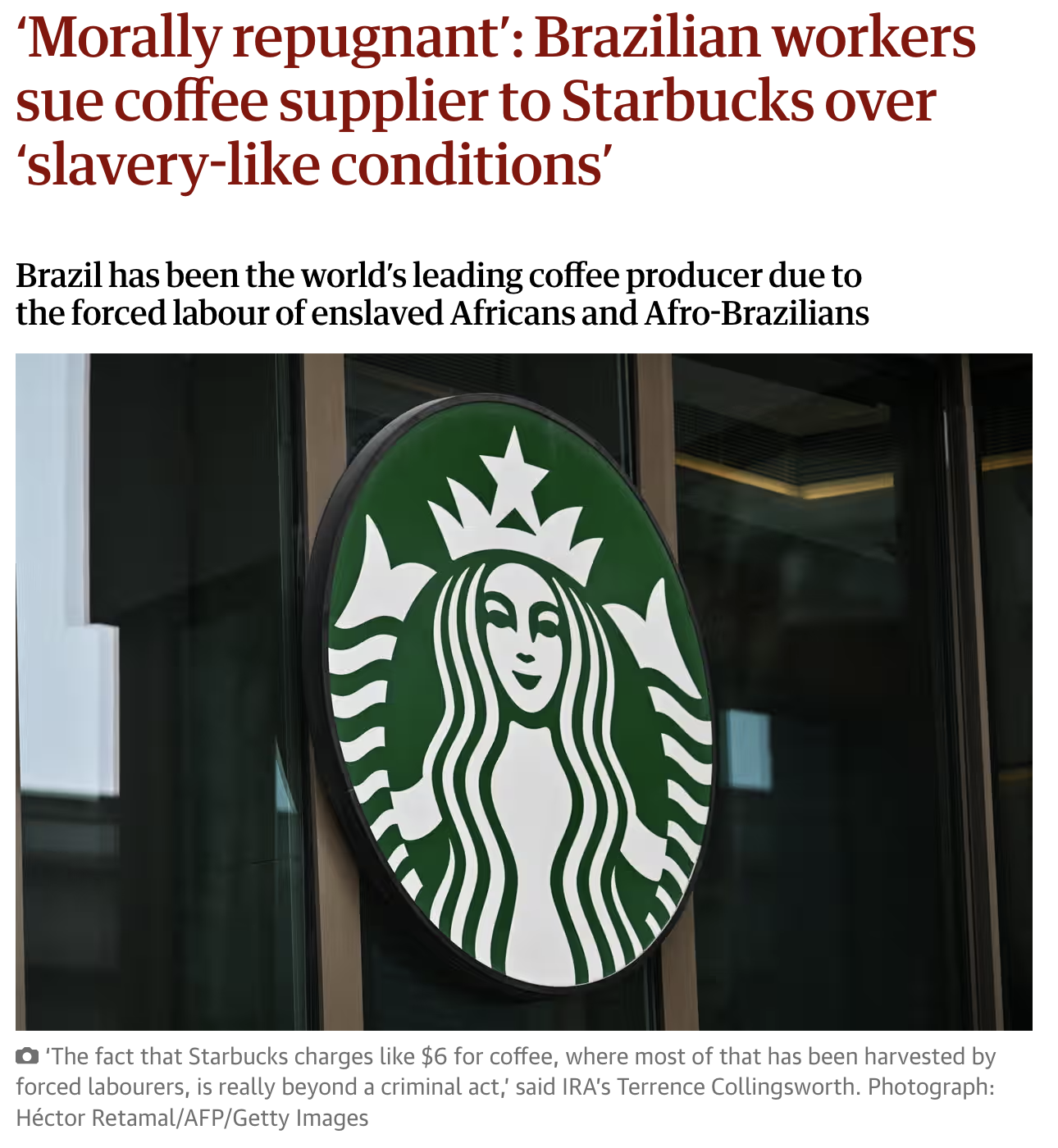
The Guardian
-
![]()
UOL
-
![]()
Le Monde
-
![]()
Geopolitika




Contribute to our work by donating.
I'll support you!

Advocate by reaching out to the companies being sued.

Sharing on social media using our toolkit